
“I so could just be a fucking oyster, at her computer with Ableton open, trying to spit out this pearl because otherwise it'll kill me.”
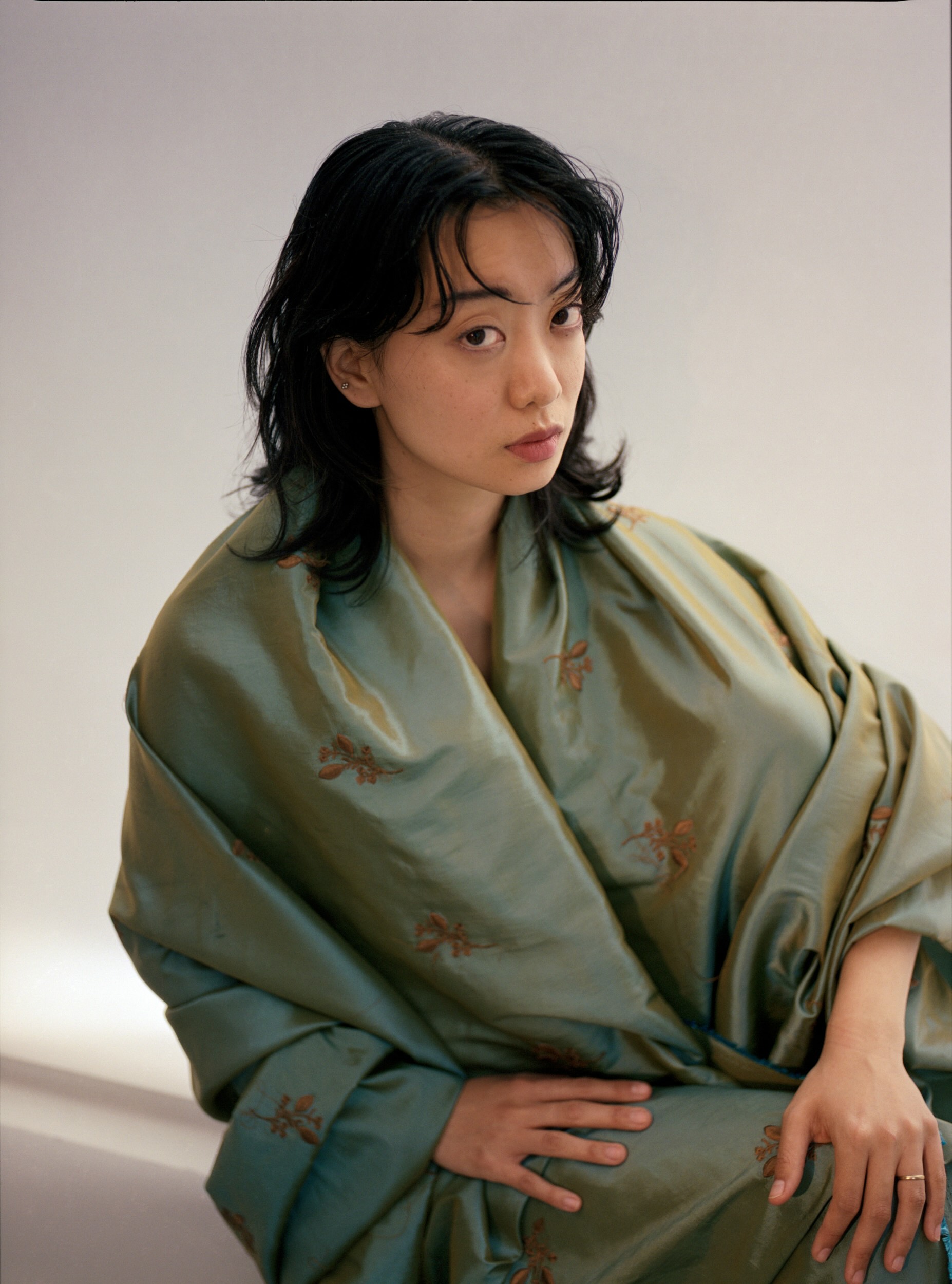
object blue has spent the last decade navigating two worlds that don’t always comfortably coexist: experimental electronic music and the machinery of a successful music career. The primetime festival slots, artist management, agents organising press calendars, fashion bookings, headline shows, radio residencies - object blue has had them all. But as we sit across from her, it’s clear she’s increasingly resistant to the expectations that come with them, determined instead to make music on terms that feel fully her own.
At the time, she was still operating inside the structure of a growing music career: management, bookings, release schedules and the pressure of maintaining momentum.
“It very much felt like a career. And of course that is a blessing in a way that everybody dreams about doing music full-time. Because that's validation, that I'm good enough,” she says. “Which is quite funny because I think most of us now understand that careerism is not a meritocracy. But somehow we still crave this validation, to be a real artist.”
At what point did career strategy start interfering with the music itself?
“I got to the point where I was thinking about whether my album would be beneficial to my career, and that was poisoning the process of making it,” she says. “I kept wanting to write non-club stuff, but then I would shut myself off and think, no, no, you can't do that. It's not gonna get played, it's not gonna get playlisted.”
object blue resists a clean anti-industry framing - this isn’t as simple as commercialism corrupting artistry.
“My managers obviously liked my music and believed in me,” she says, “but they did have certain ideas of well, you should try to have a banger that would get some press and then we’ll use that press to push you further.”
“And as somebody who's always felt very inexperienced in the real world, I do appreciate having management that can think about my career, think about negotiating fees.”
But when her manager stepped away from artist management during Covid, something shifted.
“I finally thought, you know what, even if I make a bunch of experimental tracks with no strong beats, I'm not going to make the job difficult for my manager to promote it.”
As the gap between releases widened, the anxiety became less about the album itself and more about relevance.
“People’s attention spans get shorter and shorter every year,” she says. “And I realised that the more I thought about, oh if I don’t hurry up I’ll lose momentum, oh if I don’t put a catchy banger out then people are going to lose interest, the less I could write music. It just petrified me. I felt so paralysed.” Eventually, she stopped trying to optimise anything.
“I thought, you know what? These are the tracks I’ve managed to feel passionate about and finish or bring close to finish. And they’re just going to be my album. Forget the outside voices in my head and just listen to the music that I want to hear and make.”
The resulting record moves between ambient passages, fractured club structures and moments of clarity without ever fully settling into one mode.
When did you realise the album actually had a shape?
“The earliest track I wrote was ‘galalith’,” she says. “And then ‘nacre’ came pretty soon after that. And then ‘you’re all I wanted’ and ‘all the world’s a stage' also came quite early.”
But sequencing the album became its own problem.
“DJ Pitch heard it and said, I love the tracks but they sound like they come from three completely different worlds,” she says. “So: shit, I need to rethink the track order.”
That tension between coherence and fragmentation became central to how the album was assembled.
“I wanted listeners to be lured safely into the realm of this album, and then I’m going to make them swallow ‘galalith’,” she laughs. “And then you get the rest of the album.”
How did the album title finally come together?
Up until mid-July 2025, the project was still called Working Title LP1.
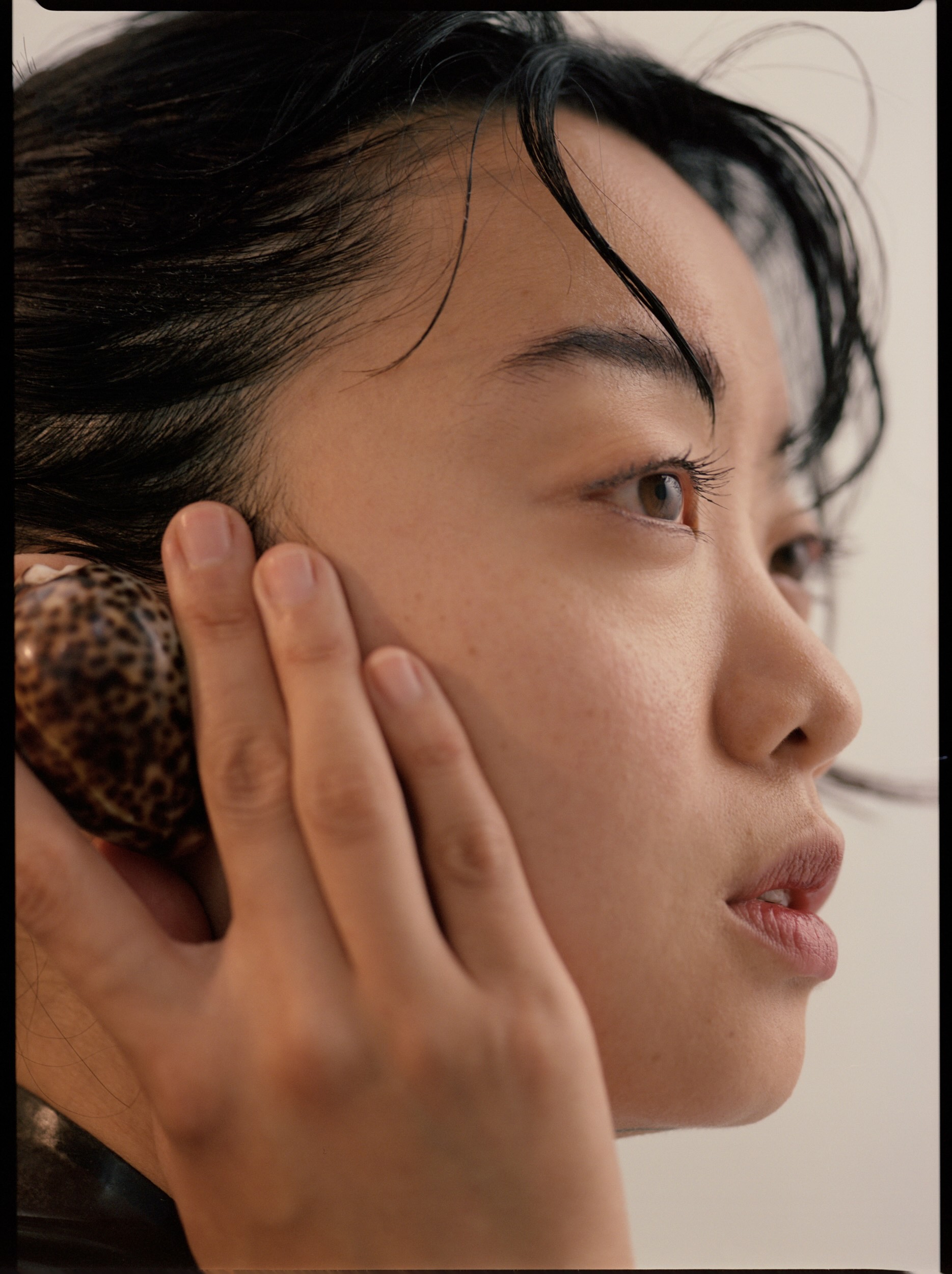
“I knew I had this fascination with pearl culturing,” she says. “I went to a pearl culturing museum in Ise [Japan], and I was really moved by the sensuality, the eroticism, and the violence of pearl culturing."
That fascination slowly became a metaphor for the album itself.
“So I thought, you know what? I so could just be a fucking oyster, at her computer with Ableton open, trying to spit out this pearl because otherwise it'll kill me.”
But naming it proved harder than expected.
“I try to find archaic words or foreign words every time I title something,” she says. “And all the pearl culturing words were pompous Latin words like 'nucleus'.. I’m not gonna call my album nucleus. That’s too much, even for me. If I were doing a satire object blue album, I'd probably call it ‘nucleus’ or ‘nuclei’ or something.”
Eventually she returned to Anne Boyer’s poem, what resembles the grave but isn’t.
"I read it 8 years ago,” she says. “And I thought, yeah, this is it.”
The poem feels hopeful despite the imagery. Did that resonate with where you were emotionally?
“I think it’s a very optimistic poem,” she says. “It’s playful. It’s cheerful. It’s also just plain strength and survival."
For her, emotional resolution shouldn’t have to be tidy or aspirational.
“I’m very anti-‘be happy all the time’, you know? ‘If you’re feeling unhappy you should just get a life coach and you’ll be happy all the time.’ No. Human experiences are whole. There is good and bad.”
Looking back, how do you feel about your years with management?
“I completely see their point,” she says. “I don’t think they were stupid commercial villains or anything."
Still, the contradictions were real.
“I really pushed back on it,” she says, recalling early disagreements about gig strategy. “I ended up playing my friend’s party instead of waiting for Printworks or something."
There are parts of that world she still misses.
“I really miss my manager bringing me a £4000 fashion job,” she laughs. “I mean I do think that’s very much a circuit thing.”
object blue remembers one particularly surreal booking. “I got booked for a Hugo Boss fashion week party in Berlin and they paid me around £5000. And then they kicked me off the decks halfway through because one of the higher-ups walked in and said ‘I don’t like it, kick her out.’”
“I said, yeah this is very disrespectful,” she says, “because you book an artist to do what they do. But whatever, I will leave.”
How does collaboration change your relationship with music-making?
“With TSVI it’s completely different,” she says. “It’s more fun because I’m not trying to please my harshest critic, which is myself.”
The process also becomes less psychologically loaded.
“He says okay you have 8 bars of this and then 16 bars of this,” she says. “And I ask, can we put a splashy sound there? Let’s put a splashy sound in.”
On ‘Thought Experiment,’ she recalls pushing through an idea that initially sounded wrong.
“He said, I don’t think people are going to like it. But I said, if you repeat it every bar it starts forming into a rhythm. Let’s just do it.”
Where do you go looking for new music?
"Bandcamping,” she says simply. “I try not to just look at Europe. I set the region to be all over the world.”
“That’s how I get a 10 track album from a dude in Kazakhstan who has 4 downloads,” she says. “That’s the stuff I love.”
What goes into preparing for your DJ sets?
“I like surprising people. I love when people come up to me after sets and say, ‘I've never heard that kind of music, and I didn’t think I could dance to that kind of music but I could’ and I’m like ‘yes! I’ve opened their ears to the stranger or the wonkier or the more challenging, more obscure parts of music’”.
Though her sets often draw from the more demanding edges of club music, they rarely feel exclusionary. A glance across an object blue crowd quickly shows the breadth of listeners swept into her orbit:
“what really surprised me is: lads love me! When I walk around festival grounds it's always like ‘oi object blue, I fucking love you!’ It’s so funny because there’s me and everything I stand for, and then there’s English lads. It's like you think the venn diagram will never cross over, but then like there is a tiny crossover, and it's bass. Bass is in the middle.”
Do Tokyo and Beijing still shape your relationship with sound?
“Maybe that’s why I like noise so much,” she says. “Because I always heard industrial drilling.”
There’s a reflection on how far her life has diverged from those she grew up with.
“Everybody from my school went to work at Goldman Sachs or something,” she says. “And now everyone’s rich and I’m a waitress. But hey, I’m happy with myself."
After four years of delay, rewrites and abandoned expectations, what resembles the grave but isn’t, finally emerged once object blue stopped trying to make the “correct” debut album.
Or, as she puts it: “a pearl spat out before it killed me.”
Listen to object blue's debut album what resembles the grave but isn't, and her guest set at Bleached Club at The Glove That Fits from 29-11-2025.